Hebden, Todmorden and Wallace Seymour
For something to do, this last week, we decided to go over the Hebden Bridge – the archetypal day out in West Yorkshire. Of course the climate-changed English Weather being what it is after a lovely hot Monday (which was actually quite beneficial to get a for bit of gardening done) it decided to piss it down. There was of course an ulterior motive for me as I have wanted for a while to get my hands on some Wallace Seymour watercolours and visit the shop Craft and Canvas which carries them – which is not open on Mondays.
I love Hebden Bridge, it was one of the first days out I experienced when moving to Leeds due to Walkleys Clog Mill back in the days of following New Model Army religiously round the country – it’s always (albeit occasionally in a touristy manner) been the bastion of hippy-ness and has a great array of shops.
I have to say though, the repeated tribulations of constant flooding, and no doubt Covid and the bloody cost of living, have taken its toll, and there are more and more boarded up shops every time I go – which is such a shame.
And coupled with the fact that some of the town seems to close on Tuesdays, a matter which has slipped my mind.
Stull, a wet day out in Hebden Bridge is better than sitting at home. Here’s the usual small set of pictures.
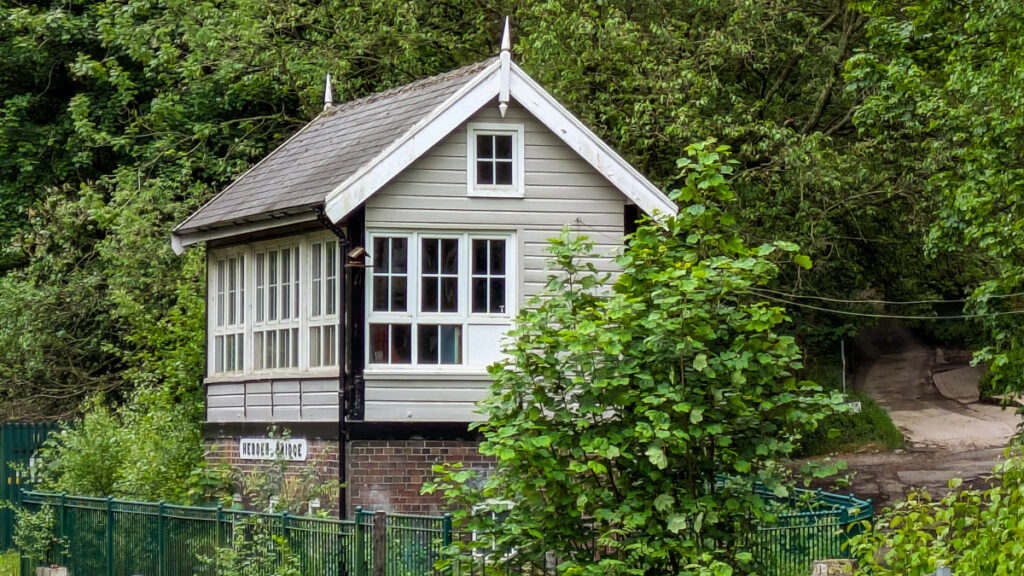
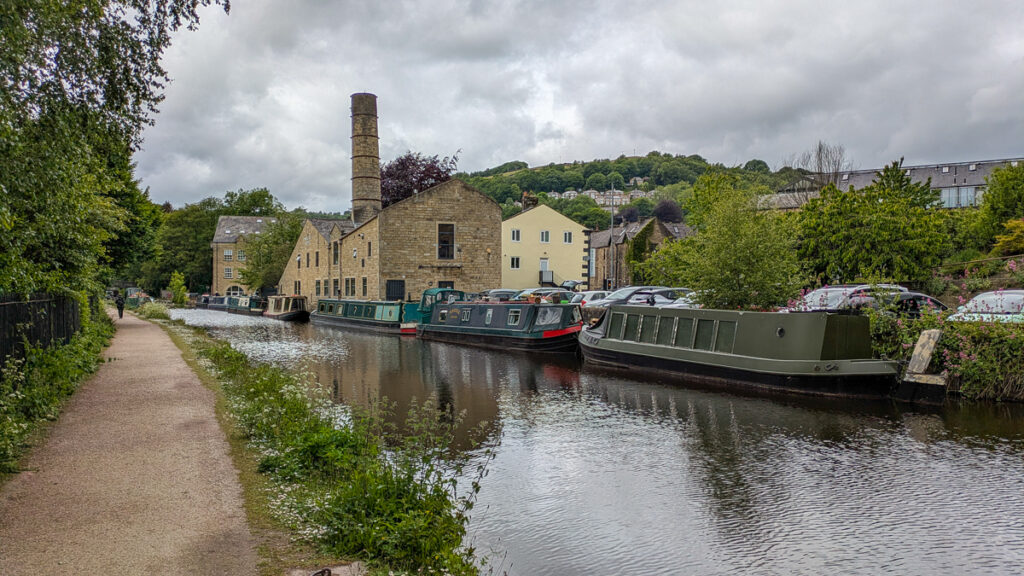
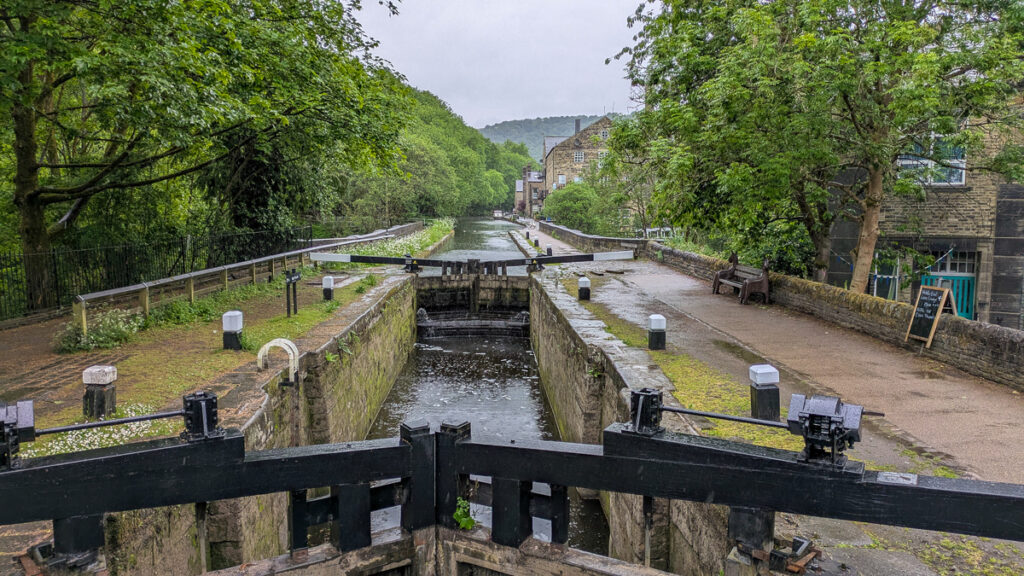
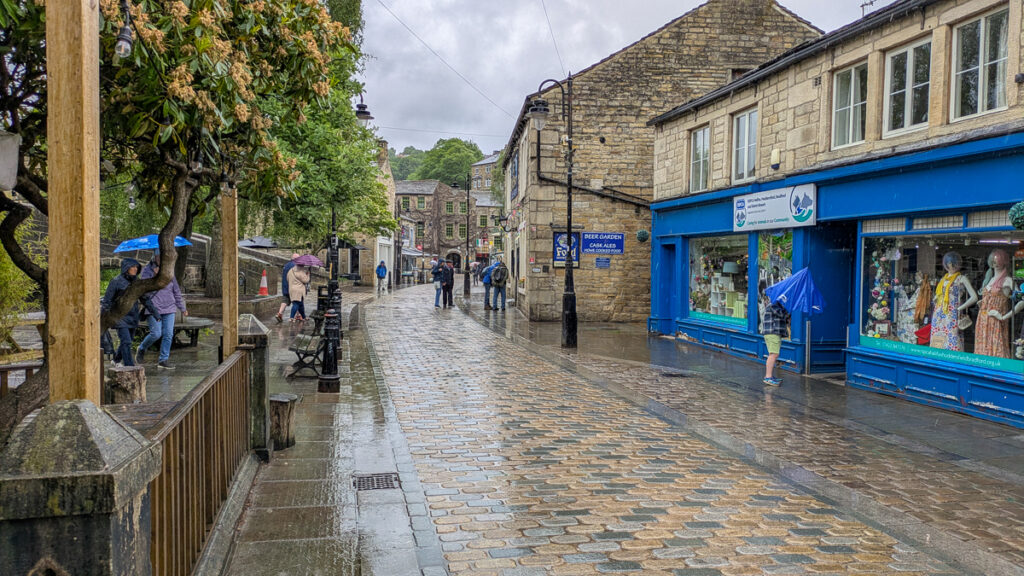
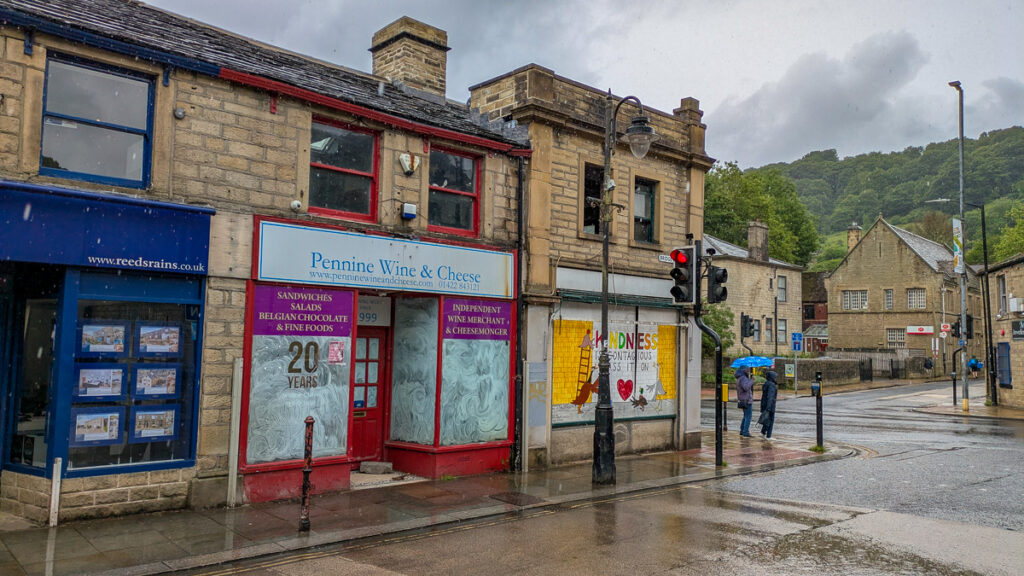
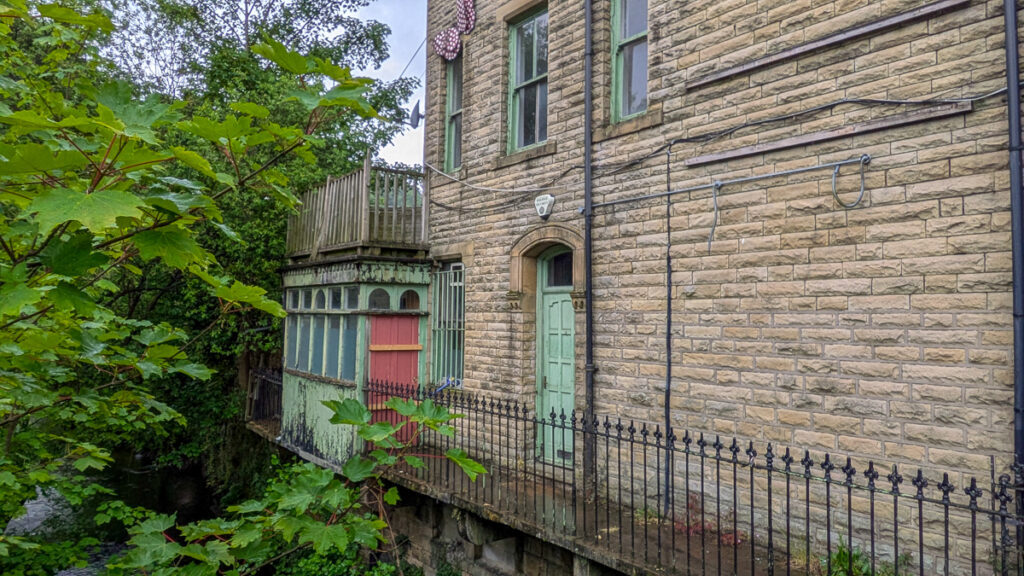
Craft and Canvas did not dissapoint – more on that later. We had a lovely and extended chat with one of the artists in the Mill (whose name I misremember) and I bought a rather nice book – Painting Calm by Inga Buividavice1 from The Book Case and a stash of second hand art books in the charity shops.
On a whim, we decided to go over to Todmorden. What I hadn’t realised is that if you think Hebden shuts down a bit on Tuesdays, Tod is a total ghost town! Trying to find lunch seemed a total wipe out, until we found The Honest John – a place which looks like a sports bar from the outside and the billboards, but actually serves pretty amazing Greek food. I’ve not actually been to Todmorden for some years, and hoped to see a little more. Another time maybe.
This managed to entertain us long enough to wait for the Golden Lion to open – this being the place to be if you beleive the cool and trendy crowd (and many of the normal people I do know from those parts) – somewere again I have not been cool enough to make it to so far… Anyway, if you like a good old school and cheap music orientated pub just go, if you can – it got us steadily pissed until almost the last train home…
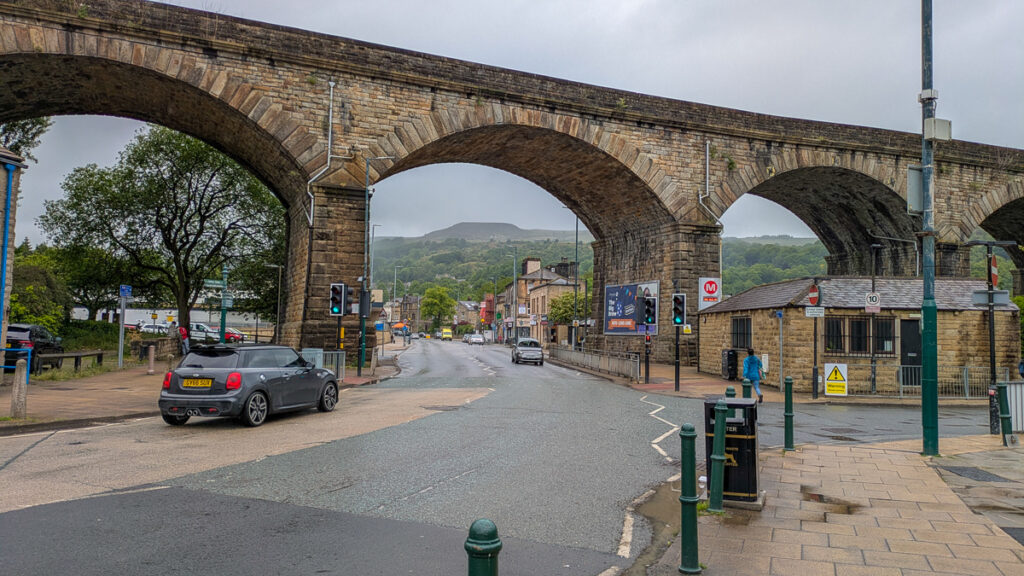
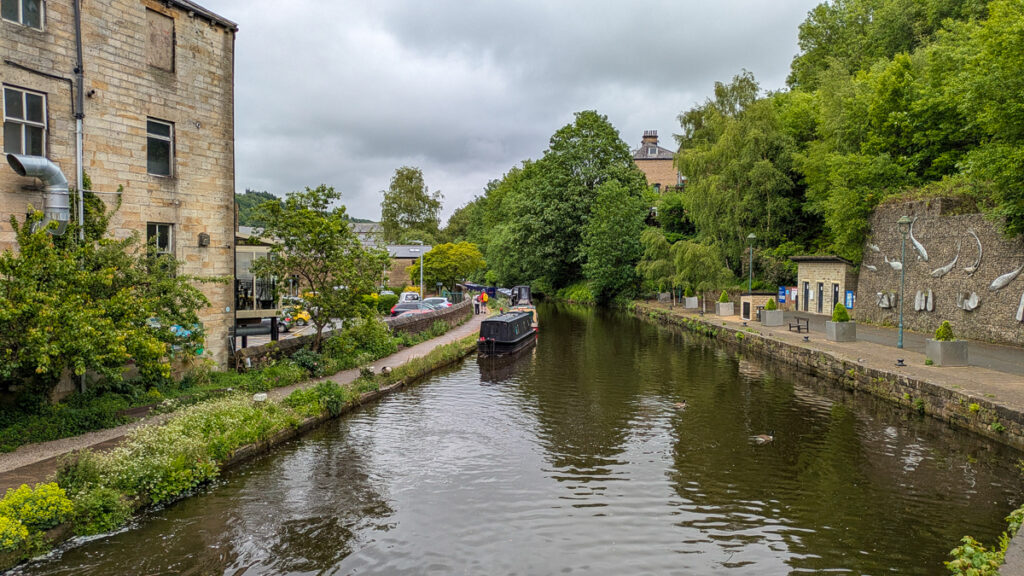
So back to Craft and Canvas, Wallace Seymour, and the artistic stuff, this being the ostensible purpose of this ‘blog when I am not blabbering on about the weather.
Craft and Canvas is an amazing little shop. Split between a salubrious range of art materials, and and equally salubrious (I assume – while I sew occasionally it’s not my primary activity) range of sewing and especially knitting and yarn products. Manned by The Chap in The Best Sweater Ever, who tolerated my waffling about pigments unendingly, it’s very friendly and what an art shop should be.
My paints were packaged for me in a smart little box, safe for the journey home.
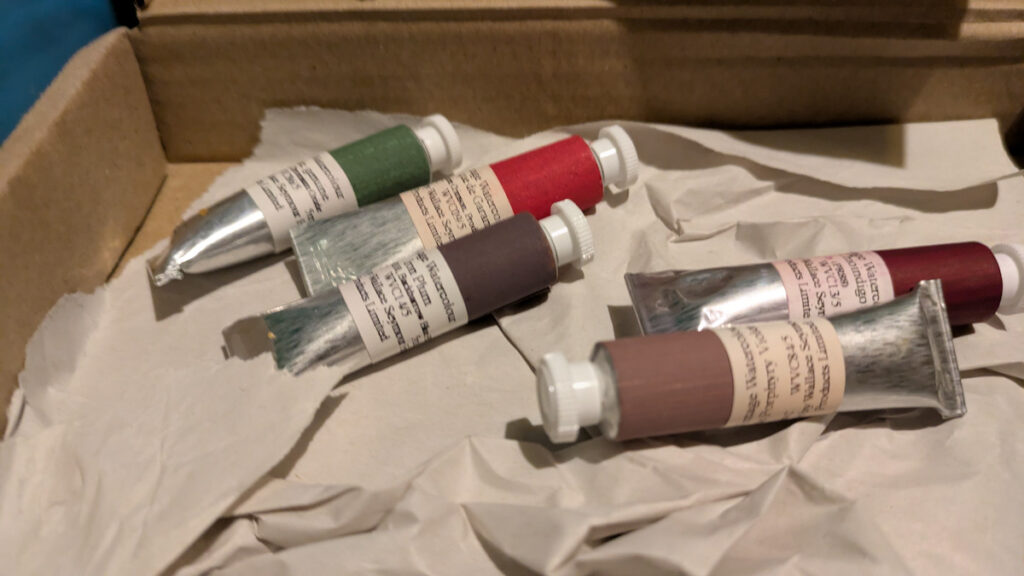
Wallace Seymour produces and excellent range of watercolours, and (the exciting factor for me) utilises both some of the rarer pigments, and a number of earths and minerals forraged both locally to Settle where they are based, and from further afield. I could have spent a LOT of money. I will go back and Spend a LOT of money some other time…
They cost around 9 or 10 quid a 5ml tube, so at the more pricey end of the spectrum, but in reality no more than many of the other quality brands cost in most places. I allowed myself 5, gravitating towards the more unusual.
And here they are:
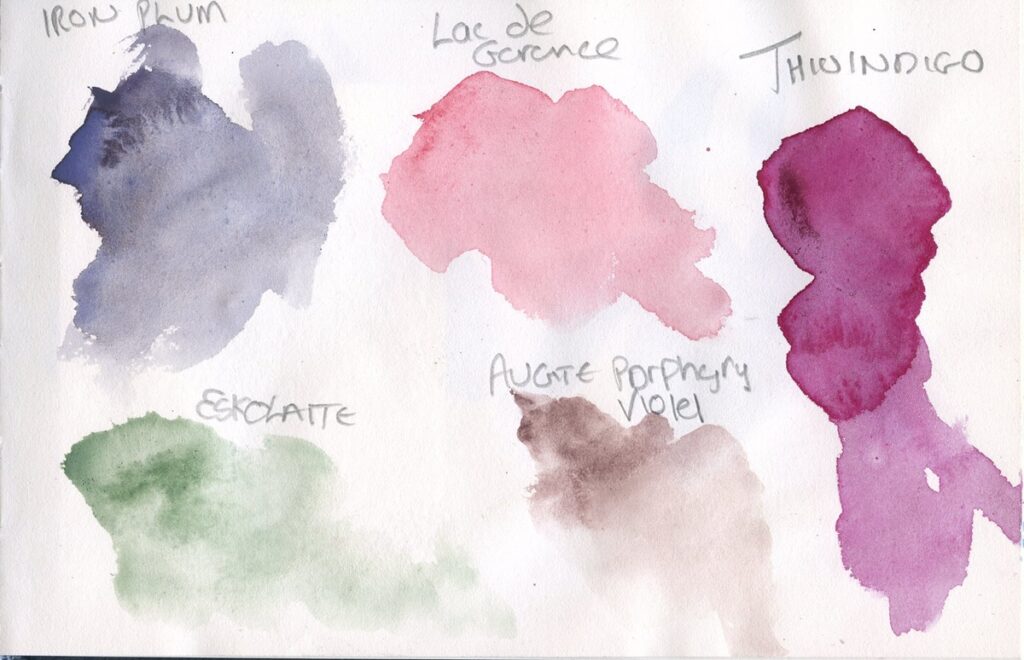
Iron Plum (PR101, PB29): This was perhaps the colour that first got my interest. After Kevin Lycett expounding their virtues on facebook, and my taking a look I was struck by this colour when I saw it, and in fact it inspired one of my own mixtures using Haematite and Ultramarine. As any watercolourist knows, Burnt Sienna (normally PR101 or PR102) and Ultramarine Blue (PB29) is a very powerful mixture, which can create a number of almost greens to almost blacks and browns and blue inbetween, and this is an extension of that. This is made with PR101 and Backbarrow Blue – a specific preparation of Ultramarine made in Cumbria from around 1895 until 19812.
Of course with a nod to Bruce MacEvoys pontification on the “Marketing Romance” of Daniel Smith’s Primatek range one can question whether there is any real value in terms of quality or effect to using this obscure source of Ultramarine, but anyone reading this will know I love interesting seperating pigments and that (as a collector of my own) I do feel a sense of connection to the source of a colour. And I will say that Wallace Seymour’s approach seems rather more ethically sound than Daniel Smith hacking up semi-precious stones (often not the most ethical product) or earth from sacred sites in Australia.
Laque de Garance (PR83): This is an original name for Madder Lake – the original botanical laked pigment of which a major constituent is Alizarin Crismon (PR83). This is a beautiful soft pink preparation of the colour, from a pigment stock from 1983.
Thioindigo (PR88): This a a rarely used dark, staining organosulphur compound which is a deep blue-red in masstone, and thins to a dusky pink. The Wallace Seymour preparation seems to exhibit a subtle tendency to backwash, showing both these sides in a beautiful manner.
Eskolaite (PG17): This is the natural mineral form of Oxide of Chromium (PG17), one of my favourite greens, for its opacity and mixing of useful moss colours with Burnt Sienna and it’s subtle sedimentary qualities. This natural form granulates even more, though I will note I found it slightly gritty – again something I don’t mind, but may put some people off if not expected.
Augite Porphyry Violet Light: Augite is a mineral with the complex formula (Ca,Na)(Mg,Fe,Al,Ti)(Si,Al)2O6 – quite a mishmash! This is a violet earth, like a toned down Caput Mortuum, and as one would expect it granulates gorgeously, and I can see this being useful for mixing natural colours as I would with Oxide Earths.
This little sketch, from an idea in the Painting Calm book uses the Eskolaite and the Thioindigo.

- It’s easiest to link to Amazon, but buy somewhere else if you can ↩︎
- Read about the History of this here: https://www.cumbria-industries.org.uk/2015/01/backbarrow-blue/ it’s fascinating! ↩︎
3 thoughts on “Hebden, Todmorden and Wallace Seymour”